

Fiorentina anthem — Canzone Viola
VIOLAPEDIA / HERITAGE
Canzone Viola
A voice passed from one generation to the next.
Fiorentina’s anthem began in a theatre. Its story brings together the writers of 1931, Narciso Parigi’s recordings and a crowd that made the song its own.
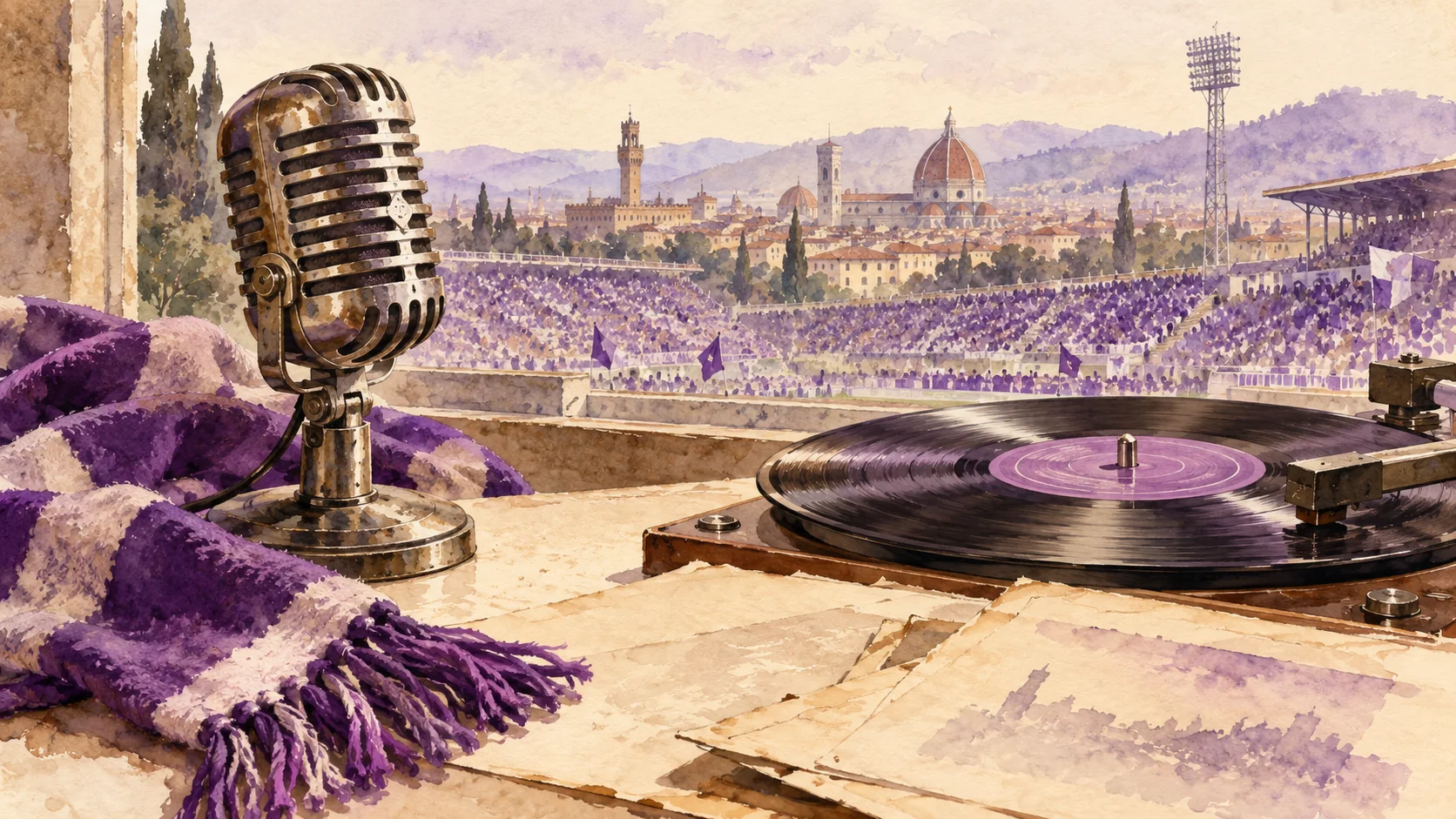
A theatre curtain before a referee’s whistle
On 20 November 1931, Canzone Viola was performed at Florence’s Politeama Nazionale. The soprano Luise Annie sang it between the first and second acts of a theatre performance. Two days later the song reached the football ground, where Fiorentina beat Roma 3–1. Its first audience had heard it from theatre seats.
Fiorentina was only five years old. The club’s Serie A debut and the opening of its new stadium also came in 1931. The anthem belongs to that moment of ambition: a young team finding its place in Italian football and a city acquiring another reason to recognise itself in the violet shirt. Those circumstances help explain the ceremonial language that still carries across the terraces.
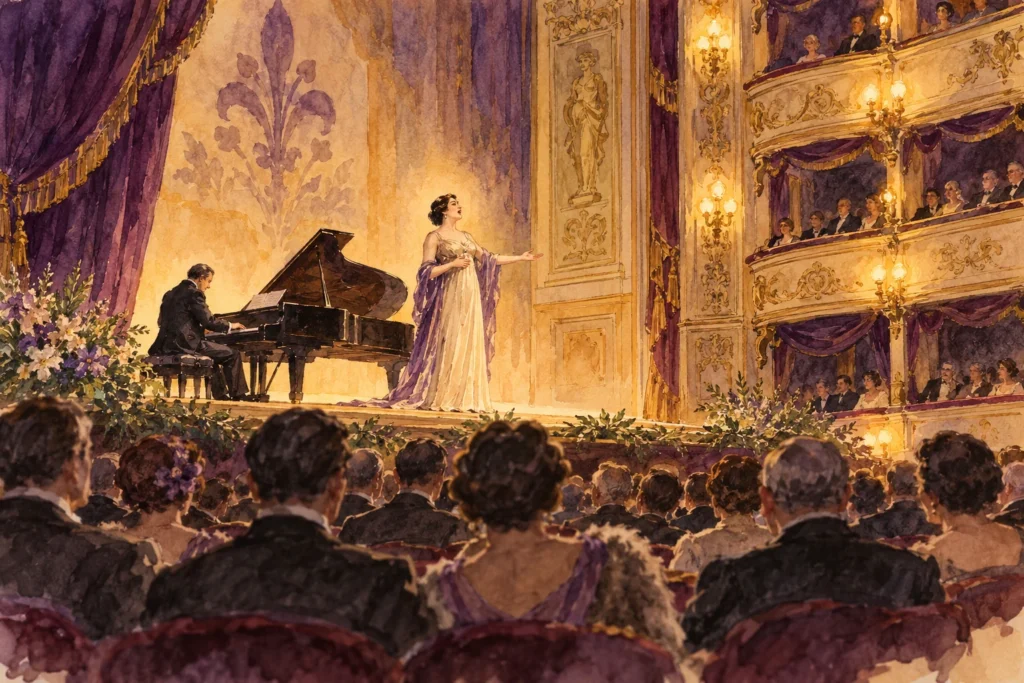
Who wrote Canzone Viola?
Enzo Marcacci wrote the words, Marco Vinicio composed the music, and Marcello Manni was its publisher. Their names can disappear behind the singer whose voice became familiar to generations of supporters: Narciso Parigi.
Parigi was the interpreter of the anthem. His recordings gave it a sound so closely associated with Fiorentina that song and singer became inseparable in the club’s memory. Remembering the original writers alongside him restores the full story: a composition from 1931, followed by a performer who carried it into another age.
| Role | Name | Contribution |
|---|---|---|
| Lyrics | Enzo Marcacci | The words of the 1931 song |
| Music | Marco Vinicio | The anthem’s composition |
| Publisher | Marcello Manni | Publication and rights |
| Best-known performer | Narciso Parigi | Post-war recordings that shaped the familiar stadium sound |
Parigi’s voice — and an unexpected chorus
Parigi’s important recordings include versions from 1959 and 1965. The later one was shorter, omitting a stanza from the original song. An old printed lyric sheet can therefore differ from the recording a supporter remembers hearing before a match.
La Nazione records a lovely detail about a late-1950s recording: players from Inter took part in the chorus. Parigi’s friendship with Egisto Pandolfini, a former Fiorentina player, helped bring them together. A song now inseparable from the violet crowd thus contains a small connection to a Milanese rival, through a friendship that crossed club boundaries.
Parigi later donated the song’s rights to Museo Viola. A familiar voice from records and stadium loudspeakers became part of the institution preserving the club’s history, as well as the memories of those who had grown up listening to it.
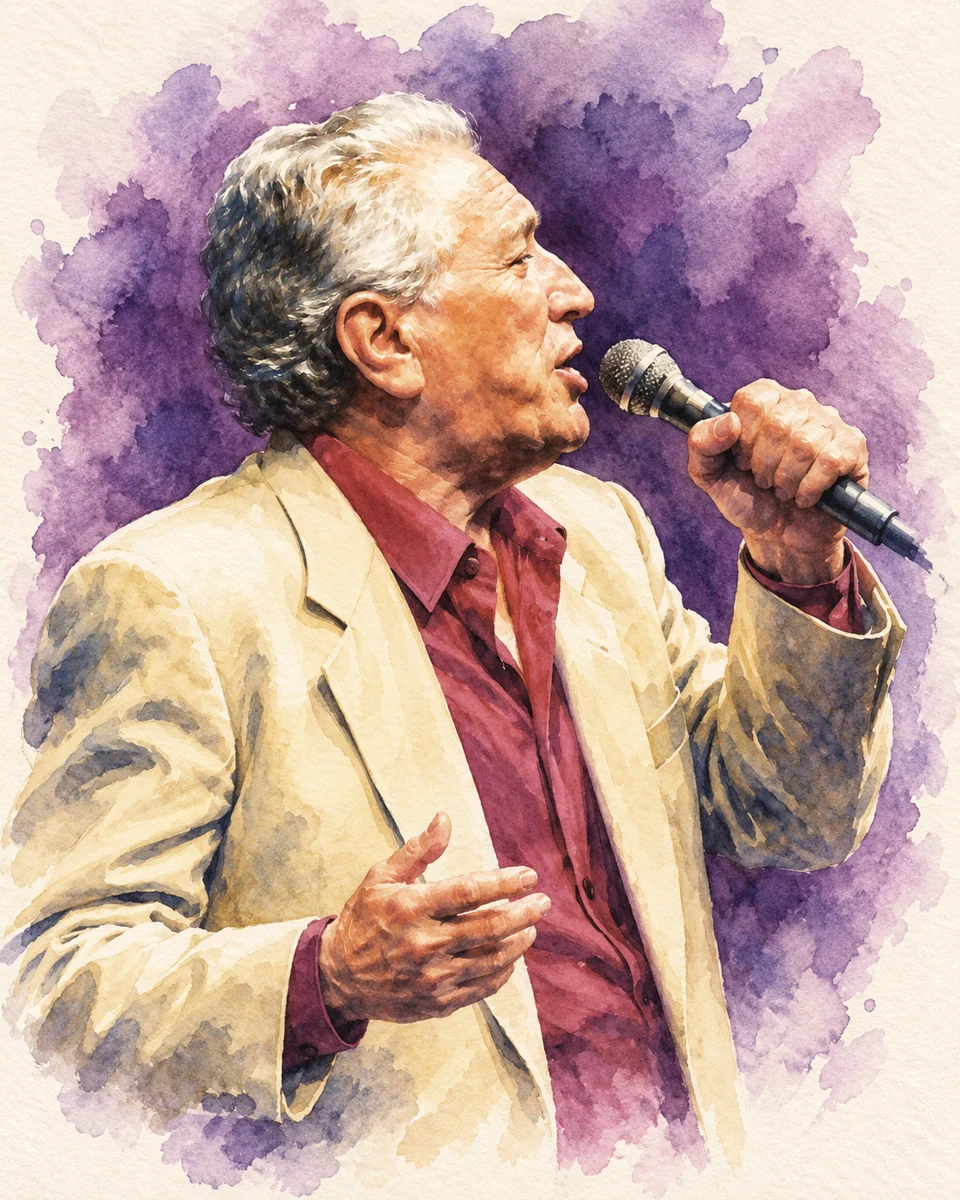

Listen to Canzone Viola
Start with the recording, then return to the words. The march-like rhythm and broad refrain make sense when heard aloud: the melody gives a crowd room to join in, turning a solo voice into a shared ritual before kick-off.
▶ Listen to Canzone Viola on YouTube
What are the supporters singing about?
“O Fiorentina, di ogni squadra ti vogliam regina” expresses the wish to see Fiorentina reigning over every other team. It is a small line with a very large ambition: affection, expectation and the kind of faith that can survive an unhelpful league table.
The song gathers its supporters beneath a violet standard and invokes the flower of Florence. The team is urged to play with courage, while those singing declare where their allegiance lies. Its words ask for victory, but repetition gives them another meaning: players change, seasons pass, and the same tune remains.
Some of the Italian is ceremonial and belongs to the song’s period. Knowing a few words brings its imagery into focus, particularly the banner moving in the wind. It also makes the connection between the football club and the city much clearer.
| Word | Meaning | Image in the song |
|---|---|---|
| Garrire | To flutter or flap, when used of a flag | The standard moving in the wind |
| Labaro | A ceremonial standard or banner | The sign around which a community gathers |
| Giglio | Florence’s heraldic flower | The city’s emblem, associated locally with the iris |
A few dates to remember
- 1931The theatre premiere and first stadium performance.
- 1959One of Parigi’s key recordings.
- 1965A shorter recording, with one stanza omitted.
- Across generationsRecords, radio and stadium speakers carry the melody into the crowd.