

Fiorentina colours and symbols — the iris, giglio and violet
VIOLAPEDIA / HERITAGE
Colours and symbols
A violet team. A red flower. A Florentine story.
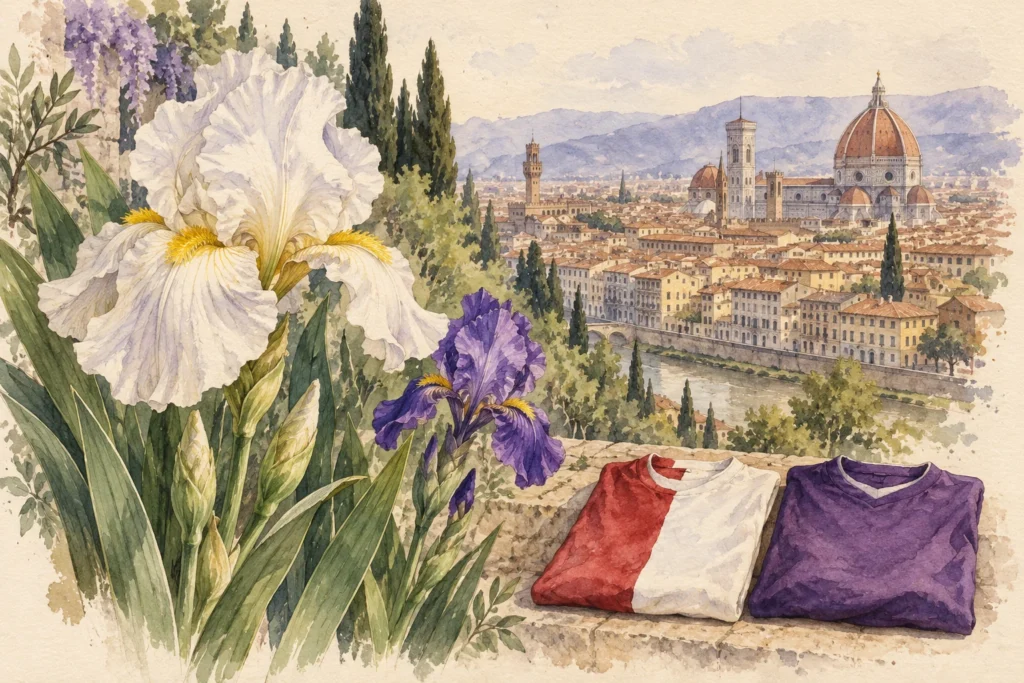
Fiorentina wore red and white before it wore violet. The flower on its shirt carries a much older story, reaching beyond football to the iris and the arms of Florence.
A heraldic lily with an iris behind it
Giglio is Italian for lily. In Florence, however, the word names an emblem whose local botanical association is the iris, or giaggiolo. A literal translation needs a little explanation: the city’s stylised flower is not a botanical drawing of a lily from the genus Lilium.
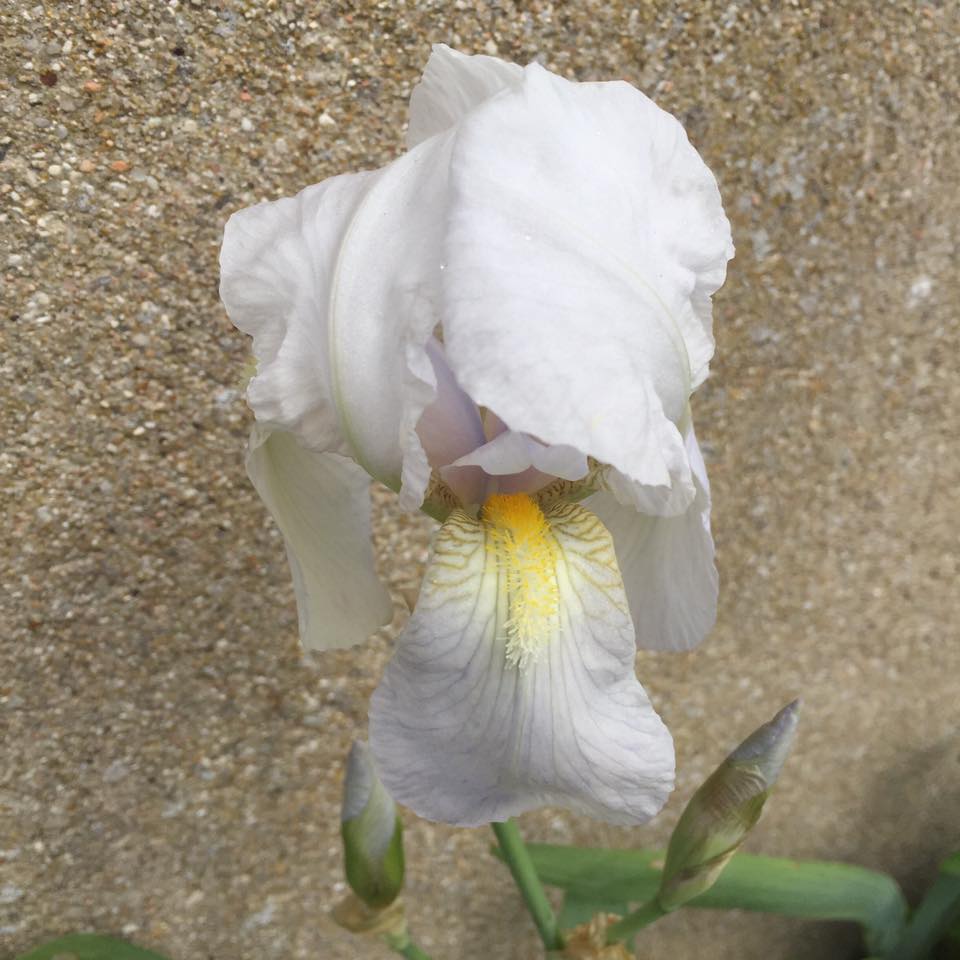
Look at the iris in the photograph. Its outer parts open and fall away from the centre, while the inner ones rise upwards; a yellow beard marks the base of the falling petals. Heraldry turns that complicated flower into an orderly, symmetrical sign. Florence’s giglio also has distinctive small side elements, often described as stamens, which help distinguish its outline.
Local accounts do not always use the same botanical name. Iris florentina appears alongside references to Iris pallida. The important shared connection is to the iris of the Tuscan landscape. Nor does the red colour of the heraldic device mean that the flower behind the tradition had red petals.

Red and white belong to Florence
The city’s familiar arms show a red giglio on a white field. An older tradition used the reverse: a white flower on red. The reversal is associated with the struggles between Guelphs and Ghibellines and the events of 1251. The flower was a civic emblem centuries before there was a football club to wear it.
Fiorentina inherited that symbol when it was founded in 1926 through the union of the footballing forces of Club Sportivo Firenze and Libertas. Its first shirts were red and white. They made the link to the city immediately legible. Violet has since become so inseparable from the team that these first colours are easily overlooked.
How Fiorentina became the Viola
The violet shirt’s debut is dated to 22 September 1929, in a friendly against Roma, during Luigi Ridolfi’s presidency. The club was three years old. Its most recognisable colour was therefore an early change, rather than something present from the first day.
Violet gave the team a particularly striking identity. The shirt paired the club’s new colour with the older red flower of Florence. That is why a violet team can retain a red giglio: the two elements belong to different layers of the same history, brought together on the player’s chest.
Shades and fabrics have changed across the years. An old shirt, a faded photograph and a modern television image cannot provide one timeless sample of the “correct” violet. Lighting, material and reproduction all affect what we see. The continuity lies in the colour recognised as viola and the city’s flower worn alongside it.
- 1251The familiar red giglio on white is associated with the reversal of the civic colours.
- 1926Fiorentina is founded. Its first colours are red and white.
- 22 Sep 1929Violet shirts appear in the friendly against Roma.
- TodayViolet identifies the team; the red flower recalls Florence.
Giaggiolo also belongs to the history of scent
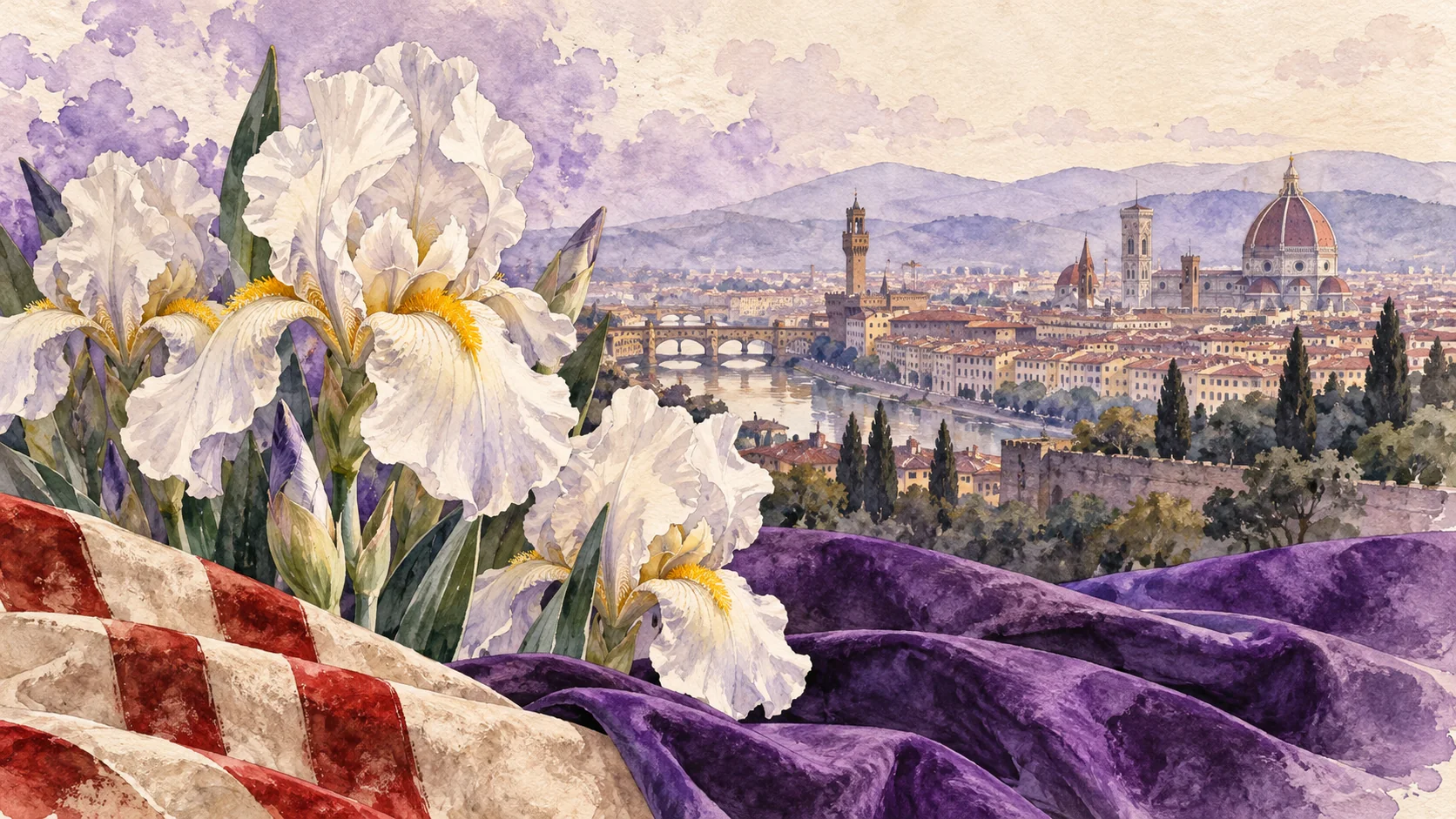
The iris has a life in Florence beyond heraldry. Municipal MUS.E material and the Fondazione Santa Maria Nuova describe its use in cosmetics and fragrant preparations. Its rhizome was especially valued: dried and processed, it became an ingredient in powders and perfumery.
That small detail opens another route into the city. The flower on a football shirt leads to a plant, and the plant to cultivation, apothecaries and the making of scents. The emblem accumulated meaning because the flower belonged to the surroundings and working life of Florence long before it became a footballing shorthand.
Flower, civic arms and club badge
Giglio is a motif that can pass between many designs. The arms of Florence, a football club’s badge and a particular embroidered shirt emblem each have their own setting. Designers can alter proportions, borders and lettering while retaining the recognisable flower.
When comparing old shirts, it is useful to look separately at the fabric colour and the badge drawing. A different shield outline does not create a different civic flower, and a new shade of violet does not erase the club’s identity. Our history of Fiorentina’s crest follows the badge designs in more detail.